When dealing with environmental issues, exposure control and regulatory closure are often seen as the end goals. After fully assessing current and future risk, it’s clear that regulatory closure should only be viewed as an interim milestone. When it comes to environmental liability, regulatory closure is seldom the end of the story. It’s often just an interim step in the process of protecting yourself from risk, communities from exposure, the environment from harm, and ensuring your new development is prosperous.
The various strategy options for eliminating exposure pathways and attaining regulatory closure can have vastly different costs when it comes to future liabilities, long-term stewardship (LTS), and Brownfields development.
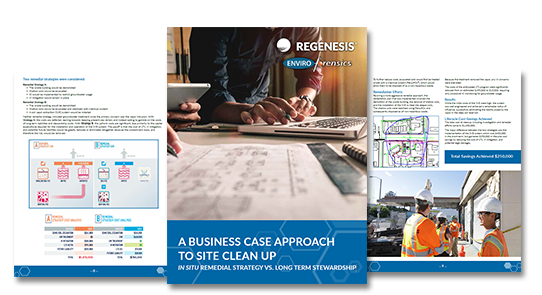
This eBook Covers
- Why evaluating remedial efforts vs. long-term stewardship is smart for business
- How point of exposure assessments helped identify where remedial and LTS program would be most effective
- How spending more on active cleanup and relying less on long-term stewardship saved three business a combined savings of $1.595M
Download A Business Case Approach to Site Clean Up
Takeaways
- Too often environmental remediation strategies focus on short-term costs without factoring in requirements for proper long-term stewardship and the associated costs of implementation.
- With recalcitrant compounds, such as perchloroethylene (PCE) and other chlorinated solvents, the threat of future exposure does not readily go away. If engineered or institutional controls fail, these lingering contaminants may present serious problems.
- Proper cost-analysis takes all the factors into account so that you can find a balance between short-term and long-term costs and make decisions that are right for you.
- By taking real costs into account it will be possible to find a well-informed balance between short-term and long-term expenditures that will help you maximize your potential savings.